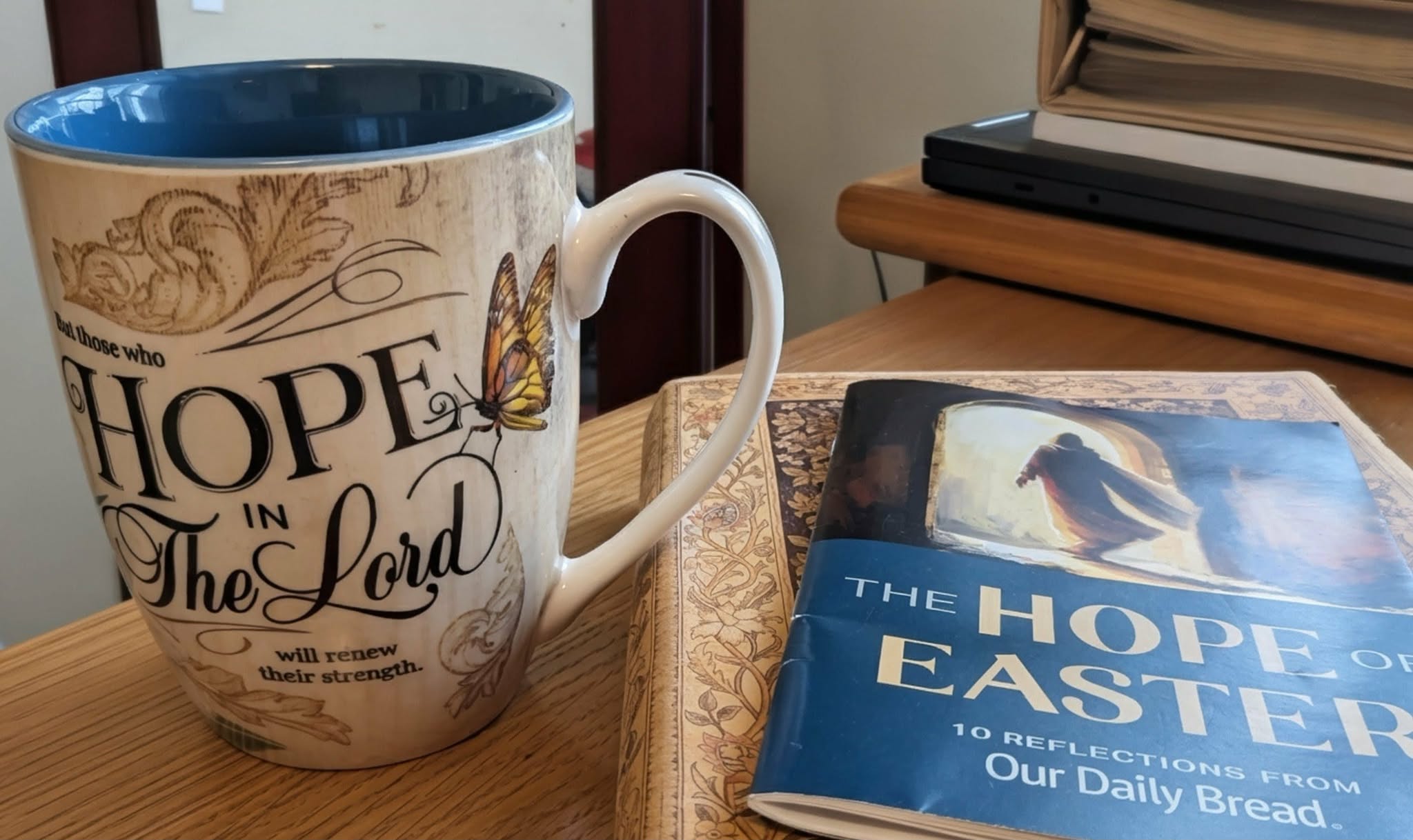
A Season of Hope

Sometimes winter can last a very long time. Here in the Western New York region it can come early and stay late. As someone recently said, “This winter lasted years!” It seems that way because just when we have a day or two of warm, sunny weather, the next day shows up with cold wind and falling snow! And so with anticipation we wait for spring’s arrival.

That is the one good thing about this world.
There are always sure to be more springs.
–Anne of Green Gables by L. M. Montgomery

Spring is my favorite season even if it can take a long time getting here! I love it, because it is the beginning of warmer, beautiful weather. Bulky winter coats get packed away along with the hats, scarves, gloves and clumsy boots. As the snow melts away, trees begin to blossom and flowers start to grow. Spring is a season of hope, a declaration of better things to come. Out of the cold hard, dormant ground, new life pushes its way through!
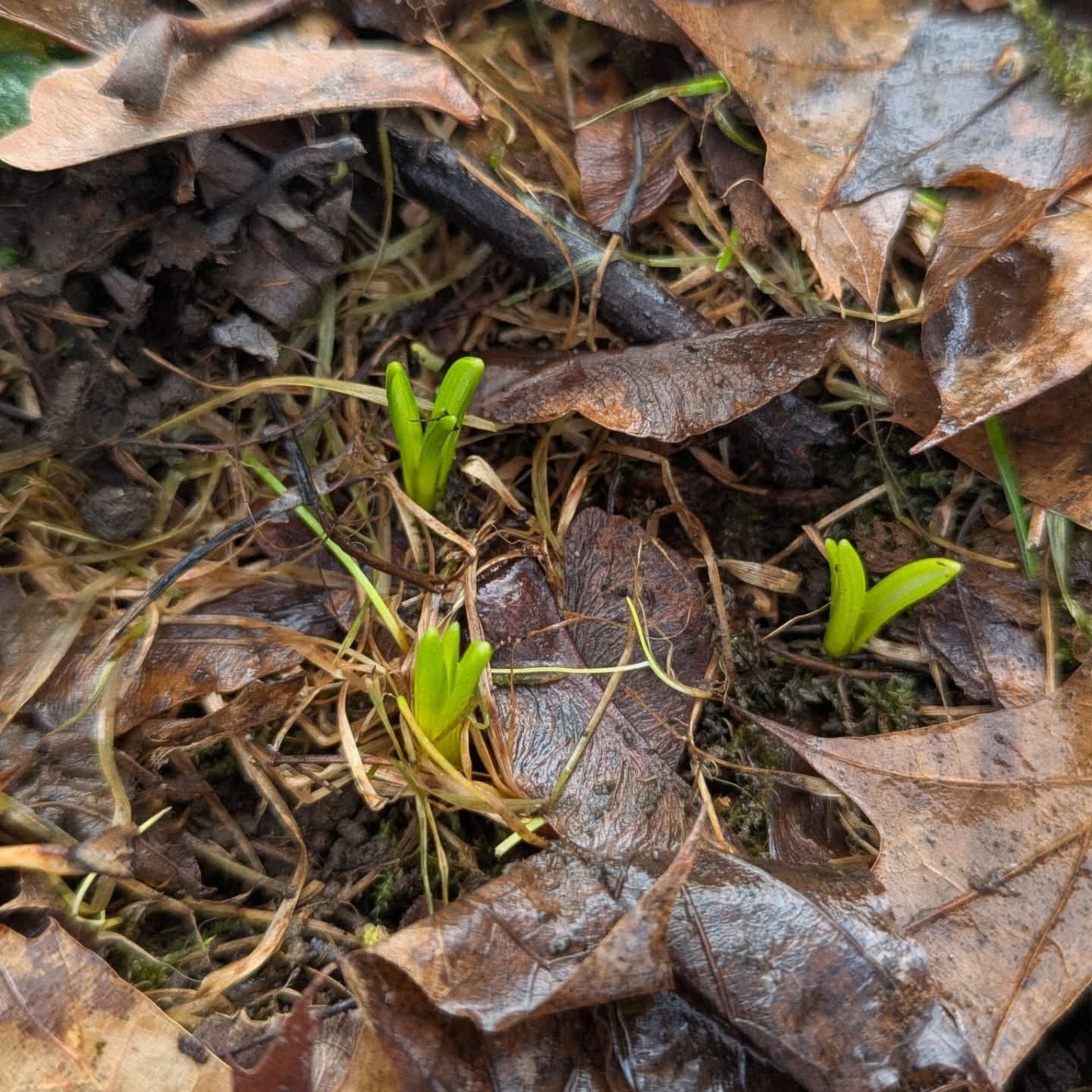
Photo credit: Eva Marie Husted

There is a chorus we sing that declares: “Up from the ashes hope will arise!” Spring gives us a glimpse of that kind of hope!

Hope is an encouraging word. It helps us to look for the positive and to face an uncertain future. Hope gives courage! It has been said that “Where there is life, there is hope.” But it has also been said that “Harsh reality is better than false hope.”

Hope is a tease designed to prevent us from accepting reality.
–from Downton Abbey

It’s a sad fact that in this world, hope can disappoint us. Things don’t always work out the way we want them to. When I was a teenager I was a patient in a hospital for children and young people with disabilities. Because it was a long term hospital (Some of the patients had been there for years!), some of us were permitted to go home for weekends and holidays. It was dependent on our physical condition and recovery from surgery. Every week, someone would read to us the names of those who were allowed to go for the weekend. I was recovering from several surgeries, but had hopes that I would be on the list to go home for Thanksgiving. I was not. My disappointment must have shown, because I was told that they wanted to make sure I was completely recovered and strong enough, so I could go home for Christmas. That made sense to me and my hopes were raised. I would rather be home for Christmas than Thanksgiving anyway. But it didn’t work out that way. I didn’t get to go home for either holiday! I felt betrayed. I was given false hope!

Hope deferred makes the heart sick…
–Proverbs 13:12

But there is a hope that will not disappoint! The Bible calls it a blessed hope, a confident hope, and a strong, trustworthy hope! It is not a hope given to us from the people around us; it is a hope held out to us by God Himself! This hope comes to us through Jesus Christ and is made available to us because of the Easter story.

Celebrate with praises the God and Father of our Lord Jesus Christ who has shown us his extravagant mercy. For his fountain of mercy has given us a new life–we are reborn to experience a living, energetic hope through the resurrection of Jesus Christ from the dead.
–1 Peter 1:3 (TPT)

How appropriate it is that Easter is celebrated in the spring! As spring is a season of hope, bringing new life into a barren world, it symbolically depicts the new life and hope we can find in Christ. The hope we have through Christ promises us not only a new life, but an eternal one as well.

When our souls lie barren in a winter which seems hopeless and endless, God has not abandoned us. His work goes on. He asks acceptance of the painful process and our trust that He will indeed give resurrection life.
–Elizabeth Elliott

If you would like to be notified of future posts, please subscribe below:
Falling Leaves and Bare Branches

The popular Christmas song It’s the Most Wonderful Time of the Year has a line in it that declares, “It’s the hap-happiest season of all.” But apparently that’s not actually true. Statistically, America’s most favorite season of the year is autumn. There’s something about the sweater weather, pumpkin spice everything, and the colorful fall foliage that people really appreciate and enjoy. But I am not one of those people. I have a tendency to view autumn as an omen of what is to come–a long cold, snowy winter.

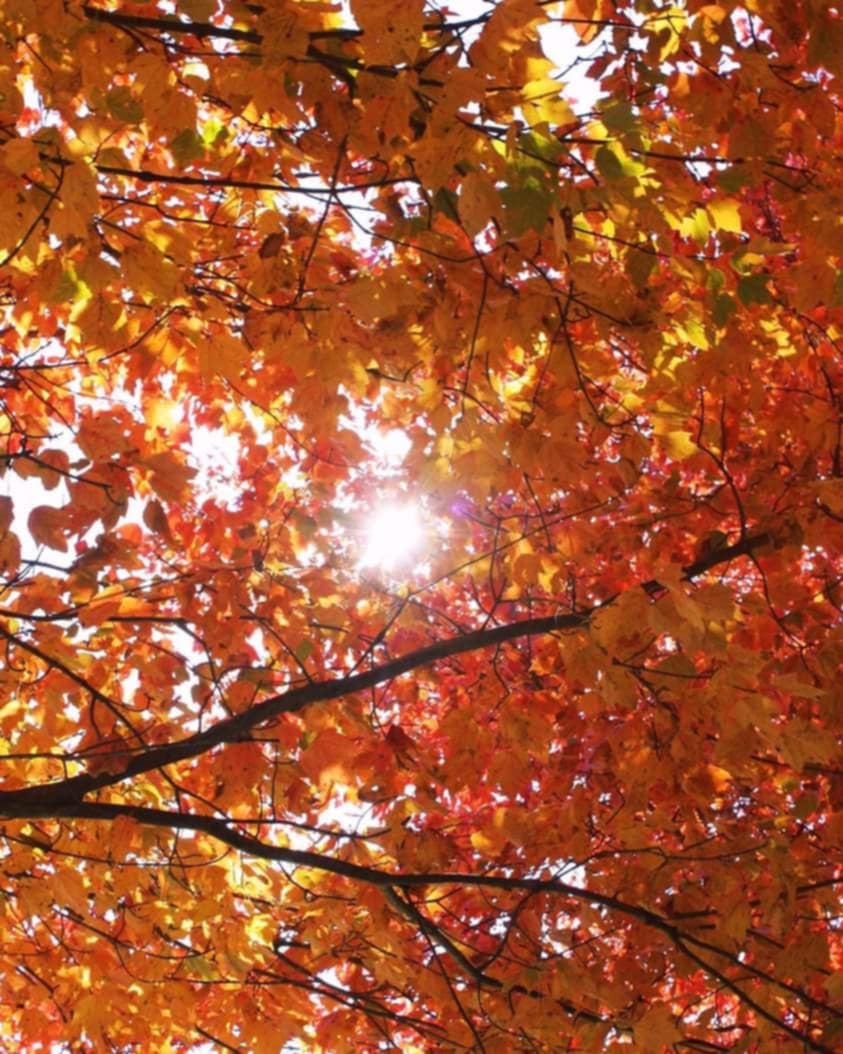
I must admit that this year the fall season was especially enjoyable. It was warm, sunny and bright. The leaves seemed more colorful than usual with varying shades of red and orange and golden yellow.

This tree was absolutely beautiful! But then something happened! The colorful leaves did not stay. One by one they fell to the ground until nothing remained on the tree. All that was left on the tree were bare branches. Not so pretty now, is it?

Photos by Eva Marie Husted

Why do the leaves have to fall off anyway? I did a little research. Obviously, they fall for a reason. Without getting into all the science behind it, simply stated, it’s for the sake of the tree and in preparation for that cold and snowy winter that lies ahead. Without the leaves, the tree is able to retain the water it needs during the winter months which reduces the amount of energy the tree needs to survive. And those bare branches are no longer weighted down with leaves and are able to withstand the snowfalls that come with the winter season. Even the fallen leaves serve a purpose as they give nutrients to the soil. Barren seasons do have purpose.

Every season has its purpose. Ecclesiastes 3:1 tells us, “To everything there is a season, a time for every purpose under heaven.” And verse 11 declares, “He [God] has made everything beautiful in its time.” But let me clarify. Certainly this is true of the seasons found in nature, but more importantly it is also true concerning the seasons of our individual lives. This chapter in Ecclesiastes gives us a glimpse of some of the seasons we encounter in living.

A time to be born, and a time to die; a time to plant, and a time to pluck up what was planted; a time to kill, and a time to heal; a time to break down and a time to build up; a time to weep, and a time to laugh; a time to mourn, and a time to dance; a time to cast away stones, and a time to gather stones; a time to embrace and a time to refrain from embracing; a time to gain, and a time to lose; a time to keep, and a time to throw away; a time to tear, and a time to sew; a time to keep silence, and a time to speak; a time to love, and a time to hate; a time of war, and a time of peace.
–Ecclesiastes 3:2-8

Some seasons of life are easier than others. It is difficult to see the purpose or benefit of a “barren season” in life. When we face loss and sorrow, we feel stripped bare and vulnerable. Like the bare branches of a tree, our foliage has fallen off and we feel exposed and ugly and useless. What good can there possibly be in this horrible time of life?! Could it be that God is preparing us for a season yet to come? Could it be He is actually strengthening us or even protecting us? Our difficult seasons are made easier to bear when we learn to trust that God is working in our lives for a purpose and for our benefit.

In her book, Anonymous, Alicia Britt Chole makes a similar comparison. Referring to the silver maple that grows in her yard she writes:

Bare, her lean limbs can support the coming snow and ice. But that weight would be too much for her frame in all its fullness. Lighter is better for the deep work of winter.
So she bows. She bends. She surrenders to thinning and in doing so thickens her foundation for an even more glorious summer to come.
In the same way, submission to God’s seasons will be our saving strength. To resist thinning is to risk collapse. The future is weighty, capable of
crushing the unprepared.

As we go through the barren seasons of our life, there is a calm assurance that comes when we trust God, knowing He is always faithful to provide strength and grace in our time of need, knowing He is always working on our behalf even in those times of great loss. Only God knows what the future holds and He lovingly prepares us for the next season of our life.

A poem to ponder:

A Measure of Grace

Deciduous trees are finally “baring it all” in defiance of the coming winter.
Soon they’ll be stark naked, without leaves on their branches to catch any frigid gusts.
True, they might freeze—I’ve seen it happen before—but this baring removes much of the potential risk of broken limbs, along with other things that might hinder
Their successful passage through the cold, through the long nights, through the blind icy thrusts
That seem to come from everywhere in the darkest time of the calendar here in the northern half of the world.
It’s those blind icy thrusts that I and all of us need to learn not to fear.
They’re the unexpected moments for which the deciduous trees, and we, need to prepare in order to find new buds, new chances, new vistas unfurled
That we may not even understand at first but will be revealed to us as this creaky old year
Stumbles fitfully away and a new one crawls in on hands and knees, not yet able to speak but with its message in its tiny little hands tightly curled.
It’s waiting to pass that message to us at the appropriate time, in the appropriate way, in the appropriate place…
Provided we’ve rested, healed, learned the lessons of the blind icy thrusts, embraced the dark, and achieved from doing all that—as most deciduous trees do—a measure of grace.

by Ben Neideigh

If you would like to be notified of future posts, please subscribe below: